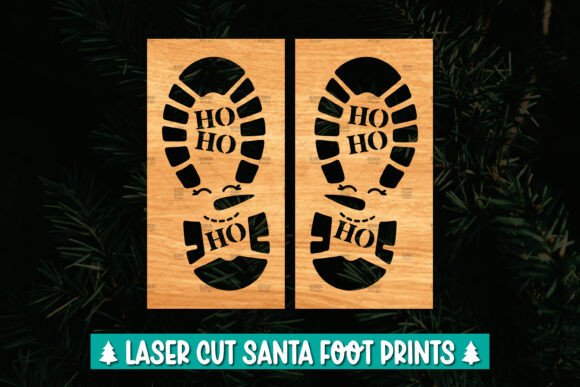
Reviewing the Santa Footprint SVG for Holiday Embroidery
As a designer who has spent countless hours digitizing and testing machine embroidery designs, I approach every new file with a mix of curiosity and skepticism. The market is flooded with holiday motifs, but few manage to balance whimsy with technical stitchability. Recently, I pulled up the Santa Footprint Svg, Santa Footprint design to evaluate its potential for real-world application. This isn’t just about whether it looks cute on a screen; it is about how it translates to fabric, how it holds up under the needle, and whether it adds genuine value to a handmade product line.
First Impressions: Mood and Visual Personality
The immediate appeal of this design lies in its simplicity. Unlike complex scenic winter landscapes that require thousands of stitches and multiple color changes, the Santa footprint concept relies on strong, recognizable shapes. It evokes a sense of nostalgia and playfulness, perfectly fitting into the Winter Amp aesthetic that dominates seasonal decor. The layout is clean, avoiding unnecessary clutter that often plagues digital embroidery files. For an embroidery designer, this clarity is crucial. It suggests that the design will stitch out cleanly without excessive thread breaks or registration issues, provided the digitizing quality matches the visual promise.
The visual personality is warm and inviting. It does not scream for attention with neon colors or aggressive detailing. Instead, it offers a subtle nod to holiday traditions, making it versatile enough for both children’s items and sophisticated adult apparel. When I visualize this stitched out, I see it working best as a focal point on minimalist garments rather than getting lost in busy patterns.
Real-World Application: From Screen to Stitch
To truly test the viability of the Santa Footprint Svg, Santa Footprint, I imagined a specific client project: a custom order for a boutique selling personalized baby gifts. The client wanted a set of organic cotton onesies and matching tote bags for new parents. This scenario is common for any Etsy seller or craft business owner looking to expand their holiday inventory.
On a baby onesie, the design needs to be soft and flexible. A heavy, dense fill stitch would make the garment uncomfortable and stiff. If this design utilizes a combination of satin stitch for outlines and lighter fill stitch or running stitch for interior details, it would be ideal. The footprint shape naturally lends itself to smooth curves, which are generally easier to embroider than sharp angles. For the tote bag, however, we can afford more density. A canvas tote provides a stable surface where the threads can sit proudly, creating a textured, high-quality finish that customers associate with premium handmade products.
Beyond baby items, this design has strong potential for sweatshirt embroidery. A small footprint placed over the heart or on the sleeve cuff adds a touch of whimsy to adult loungewear. It transforms a basic garment into a personalized gift that feels thoughtful and unique. For commercial embroidery projects, such as branded holiday merchandise for local cafes or shops, the design’s simplicity allows for quick production times, which is essential for meeting tight seasonal deadlines.
Technical Considerations and Fabric Challenges
While the design appears straightforward, experienced makers know that simplicity can sometimes hide technical pitfalls. One must consider the stitch density carefully. If the digital file is too dense, it may cause puckering, especially on thinner fabrics like jersey knits or lightweight cottons used for tote bag design prototypes. Always check the stitch count and density settings in your embroidery software before loading the file onto the machine.
Fabric choice plays a pivotal role in the final outcome. On dark fabrics, the contrast becomes critical. If the design relies on fine details, ensure your thread colors pop against the background. A white or silver thread on navy blue fleece creates a striking look, but on black cotton, you might need a brighter white or even a metallic thread to maintain visibility. Conversely, on light fabrics, ensure the stitching doesn’t disappear. Testing on scrap fabric is non-negotiable. I always recommend stitching a test sample on the exact fabric type you plan to use for the final finished product.
Curved surfaces present another challenge. If you plan to use this on a cap or hat, the footprint shape must be scaled appropriately. A design that is too wide may distort when stitched on the curved front panel of a baseball cap. In such cases, reducing the size or adjusting the orientation might be necessary to maintain the integrity of the shape. Additionally, using the correct stabilizer is vital. For stretchy fabrics, a cut-away stabilizer provides long-term support, while tear-away stabilizers work well for stable woven fabrics like linen or canvas.
Enhancing Product Value and Brand Consistency
From a business perspective, the Santa Footprint Svg, Santa Footprint offers more than just aesthetic appeal. It contributes to brand consistency if used across a cohesive collection. Imagine a line of holiday products featuring this motif on aprons, pillow covers, and tea towels. This repetition builds recognition and trust among buyers. Customers begin to associate the clean, playful style with your brand identity.
Furthermore, the design’s versatility supports various design assets for marketing. You can create high-quality printable mockups showing the design on different products, helping potential buyers visualize the end result. This is particularly useful for digital embroidery file sellers who want to showcase the potential of their product without physically stitching every item. However, if you are selling the physical embroidered item, the tactile quality of the stitch work speaks volumes. A well-executed embroidery job signals professionalism and care, justifying a higher price point.
Practical Notes for Designers and Makers
Before committing to a large production run or listing this as a new product, consider these practical steps:
- Verify Licensing: Ensure the license terms allow for commercial use if you plan to sell finished items. Some designers restrict the number of units you can produce.
- Check File Formats: Confirm that the embroidery file is compatible with your specific machine brand and model. Common formats include PES, DST, and JEF.
- Test Thread Contrast: Experiment with different thread combinations. Sometimes a monochromatic look works best, while other times, contrasting colors highlight the design’s features.
- Inspect Small Details: Zoom in on the digital preview to check for tiny elements that might not stitch out well. Simplify if necessary.
- Consider Hoop Size: Ensure the design fits comfortably within your standard hoop sizes without requiring excessive re-hooping, which can lead to misalignment.
In conclusion, the Santa Footprint Svg, Santa Footprint is a promising addition to any holiday design library. Its strength lies in its adaptability and emotional resonance. Whether used for a charming baby embroidery project, a stylish embroidered patch, or a cozy holiday embroidery accent on home decor, it offers a blend of charm and practicality. By paying attention to technical details like stabilizer choice, thread tension, and fabric compatibility, you can ensure that this design elevates your craft and delights your customers. As with any tool, its value is determined by how skillfully it is applied. Take the time to test, refine, and perfect your approach, and this simple footprint could leave a lasting impression on your business.